Introduction
Digital marketing is not just about promoting products; it is about understanding how customers interact with a brand at every stage. From discovering a product to becoming a loyal customer, every step is interconnected. This module focuses on aligning the customer journey with the marketing funnel to create effective and measurable marketing strategies.
1. Importance of Digital Marketing
Digital marketing has become essential as a significant portion of the global population is now online. Businesses must establish a strong digital presence to remain competitive and visible.
Key points:
- Enables businesses to reach a wider audience online
- Helps differentiate in a crowded digital marketplace
- Supports continuous engagement with potential customers
2. Beyond Sales: Building Trust and Loyalty
Digital marketing is not limited to driving sales; it focuses on building longterm relationships with customers.
Core objectives:
- Build brand awareness and credibility
- Establish trust through consistent engagement
- Encourage repeat purchases and customer loyalty
3. Strategic Approach to Digital Marketing
Effective marketing starts with understanding the target audience and aligning strategies accordingly.
Key activities:
- Conduct audience research to understand behavior and needs
- Select the right platforms for communication
- Set measurable goals and optimize campaigns based on performance
4. Digital Marketing vs Traditional Marketing
Traditional marketing relies on offline channels such as TV, radio, and print, while digital marketing operates entirely online.
Digital marketing advantages:
- More cost effective with reduced waste
- Precise audience targeting
- Real time performance measurement
Challenges:
- Requires continuous content creation
- Needs adaptation to evolving technologies
- Increasing competition makes visibility harder
5. Role of Technology in Digital Marketing
Technology plays a critical role in enabling businesses to interact with customers and measure performance effectively.
Key benefits:
- Faster data collection and analysis
- Ability to adjust campaigns quickly
- Enhanced customer engagement through digital tools
6. Importance of Target Audience
Digital marketing allows businesses to target specific audiences with greater precision compared to traditional methods.
Key considerations:
- Identify the right audience segments
- Tailor content based on user preferences
- Focus on quality engagement rather than mass reach
7. Diversity, Equity, and Inclusion (DEI) in Marketing
Inclusive marketing ensures that diverse customer groups are represented and engaged effectively.
Core concepts:
- Diversity: Representation of different backgrounds and perspectives
- Equity: Fair access and opportunities
- Inclusion: Creating a sense of belonging for all customers
8. Inclusive Marketing Strategy
Inclusive marketing helps businesses connect with a broader audience and avoid biases or stereotypes.
Best practices:
- Understand diverse customer demographics
- Avoid stereotypical representation
- Ensure accessibility for all users, including people with disabilities
9. Customer Centric Marketing
Modern marketing focuses on solving customer problems rather than just selling products.
Key idea:
- Identify customer pain points and needs
- Align marketing strategies to address these needs
- Deliver value at every interaction
10. Understanding the Customer Journey
The customer journey represents the complete path from discovering a brand to becoming a loyal customer.
Important elements:
- Each interaction is called a touchpoint
- Positive experience at each touchpoint is critical
- Journey includes pre purchase and post purchase stages
11. Customer Journey Mapping
A customer journey map visually represents all customer interactions with a brand.
Benefits:
- Helps understand customer behavior and decisions
- Identifies gaps in customer experience
- Supports better marketing and business strategies

AULA F75 2.4G Wireless/Bluetooth/Wired Gaming Mechanical Keyboard RGB Customized 75% Layout OEM
12. Touchpoints and Their Importance
Touchpoints are specific interactions where customers engage with a brand across different channels.
Key insights:
- Touchpoints should be defined based on customer needs, not just channels
- They provide valuable data on customer behavior
- Customer centric touchpoints offer deeper insights than business centric analysis
13. Introduction to Marketing Funnel
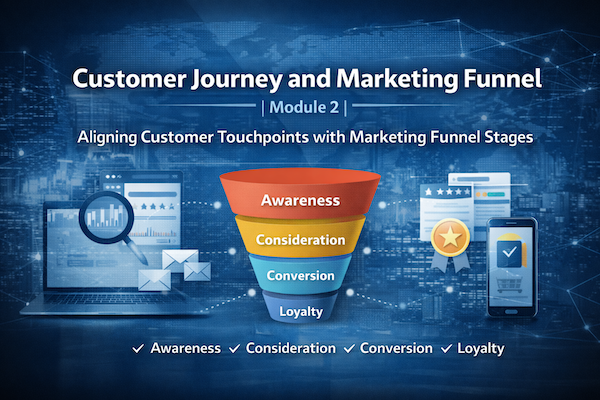
The marketing funnel represents how customers move from awareness to loyalty.
Structure:
- Wide at the top (many potential customers)
- Narrow at the bottom (converted customers)
14. Stages of Marketing Funnel
Awareness:
Customers discover the brand through ads, search, or recommendations
Consideration:
Customers evaluate options and compare products/services
Conversion:
Customers make a purchase decision
Loyalty:
Customers return and build long-term relationships
15. Customer Journey vs Marketing Funnel
While both concepts are related, they have different perspectives.
Key difference:
- Customer journey → Customer perspective
- Marketing funnel → Business strategy
16. Evolution of Marketing Funnels
Marketing funnels have evolved from simple sales models to more complex digital frameworks.
Examples:
- Traditional sales funnel (Awareness → Action)
- Digital marketing funnel (Awareness → Engagement → Conversion → Retention)
- Specialized funnels (e-commerce, social media, content marketing)
17. Awareness and Consideration Strategies
At the top of the funnel, the goal is to attract and engage potential customers.
Common tactics:
- SEO and digital ads
- Content marketing and blogs
- Influencer partnerships
Measurement metrics:
- Impressions (total views)
- Reach (unique users)
- Frequency (repeat exposure)
18. Measuring Consideration Stage
Engagement indicates how interested customers are in a brand.
Key metrics:
- Website visits and user behavior
- Time spent on pages
- Email sign ups and interactions
19. Conversion Stage
This stage focuses on turning potential customers into actual buyers.
Key factors:
- Clear value proposition
- Smooth user experience and checkout process
- Trust building elements like reviews
Metrics:
- Conversion rate
- Cost per conversion
- Average order value
20. Loyalty Stage
Customer retention is essential for long term business growth.
Strategies:
- Follow up communication
- Loyalty and rewards programs
- Continuous engagement through content
Metrics:
- Repeat purchase rate
- Customer lifetime value
- Engagement levels
21. Cart Abandonment Challenge
A significant number of customers leave without completing purchases.
Key insight:
- Nearly 70% of carts are abandoned
- Identifying drop off points helps improve conversions
22. Future Trends in E-commerce
E-commerce continues to evolve with emerging technologies and customer expectations.
Key trends:
- Specialized niche retailers
- Immersive experiences using AR/VR
- AI powered chatbots for customer interaction
- Advanced delivery systems like drones
23. Key Takeaways
- Digital marketing is essential for visibility and growth in a competitive market
- Customer journey and marketing funnel must be aligned for effective strategy
- Data and technology enable better decision making and optimization
- Customer-centric and inclusive approaches improve engagement and loyalty
- Continuous learning is required to adapt to changing trends