Introduction
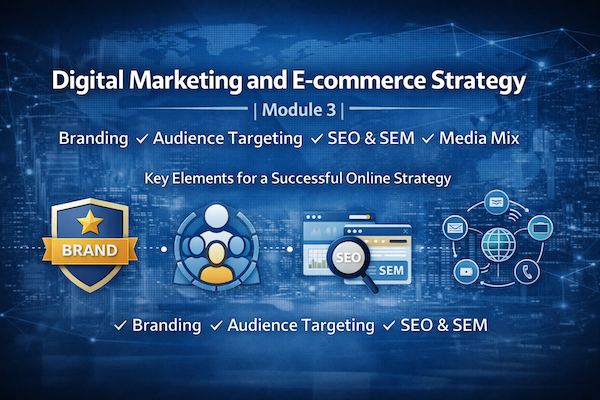
A successful digital marketing and e-commerce strategy is built on a strong foundation of brand identity, clear goals, and a deep understanding of the target audience. This module focuses on how businesses create structured strategies, select the right channels, and optimize their marketing efforts to achieve measurable results.
1. Understanding a Brand
A brand represents how a business is perceived by its customers, including its values, identity, and communication style. It is not just a logo or product but the overall experience and reputation of a company.
Key elements:
- Defines company personality and positioning
- Reflects values, culture, and tone of voice
- Shapes customer perception and trust
2. Importance of Brand in Marketing
A strong brand acts as the foundation for all marketing and sales activities. Without a clear brand identity, marketing efforts can become inconsistent and ineffective.
Key points:
- Guides all communication and campaigns
- Helps differentiate from competitors
- Ensures consistency across channels
3. Brand Equity and Its Role
Brand equity refers to the value customers associate with a brand, often influencing their purchasing decisions.
Impact:
- Customers are willing to pay more for trusted brands
- Strong brand recall improves loyalty
- Digital marketing helps build and reinforce this perception
4. Brand Safety in Digital Marketing
Brand safety ensures that a brand’s reputation is protected when advertising online.
Key considerations:
- Avoid association with harmful or inappropriate content
- Ensure ads do not appear on misleading or controversial platforms
- Maintain consistency with brand values
Strategies:
- Use trusted advertising platforms
- Apply keyword exclusions and content filters
- Monitor ad placements regularly
5. Digital Marketing Strategy Overview
A digital marketing strategy is a structured plan to achieve business objectives through online channels.
Core components:
- Audience research
- Goal setting
- Channel selection
- Performance measurement
6. Importance of Knowing Your Audience
Understanding your audience is critical for creating effective campaigns that drive engagement and conversions.
Key insights:
- Identify demographics, interests, and behaviors
- Understand content preferences and platforms
- Tailor messaging to specific audience needs
7. Customer Personas
Customer personas are detailed profiles representing target audience segments based on research and data.
Benefits:
- Helps target the right audience with the right message
- Improves campaign efficiency
- Focuses efforts on high potential customers
8. Business Goals vs Marketing Goals
Business goals define overall company direction, while marketing goals support these objectives.
Examples:
- Business goal: Increase revenue
- Marketing goal: Increase website traffic or leads
Key idea:
- Both must be aligned for effective strategy execution
9. Setting SMART Goals
SMART goals ensure that marketing objectives are clear and measurable.
SMART criteria:
- Specific: Clearly define the objective
- Measurable: Track success with metrics
- Attainable: Ensure feasibility
- Relevant: Align with business goals
- Time bound: Set deadlines
10. Media Mix Strategy
A media mix refers to the combination of channels used in a marketing strategy.
Types of media:
- Paid media: Ads and sponsored content
- Owned media: Website, blogs, and email
- Earned media: Reviews, mentions, and shares
Key idea:
- Balanced use of all three improves reach and credibility
11. Budget Allocation and Measurement
Budget planning is essential to ensure effective use of resources.
Key approach:
- Allocate more budget to awareness and consideration stages
- Track performance using KPIs
- Adjust strategy based on results

Magcubic Projector HY300 Pro 8K Android 14 Dual Wifi6 290ANSI Allwinner H726 BT5.4 1080P 1280*720P Home Cinema
12. Search Engines and Visibility
Search engines play a major role in how customers discover products and services online.
Key concept:
- Higher ranking increases visibility and traffic
- Most users do not go beyond the first page of results
13. Search Engine Optimization (SEO)
SEO focuses on improving organic visibility in search engine results.
Key aspects:
- Keyword research to match user intent
- High quality and relevant content
- Proper website structure for better navigation
14. Search Engine Marketing (SEM)
SEM involves paid advertising on search engines to drive traffic.
Key features:
- Ads appear based on keyword bidding
- Pay per click (PPC) model
- Immediate visibility compared to SEO
15. Display Advertising
Display ads are visual advertisements shown on websites, apps, or videos.
Types:
- Image ads
- Text ads
- Responsive ads
- App promotion ads
Role in funnel:
- Used for awareness, consideration, and remarketing
16. Social Media Marketing Strategy
Social media marketing focuses on engaging audiences and promoting brand awareness.
Five pillars:
- Strategy (goal setting and audience understanding)
- Planning and publishing content
- Listening and engagement
- Analytics and reporting
- Paid social campaigns
17. Social Media Goals and Execution
Different platforms serve different objectives.
Examples:
- Build relationships through interactive platforms
- Target new customers using visual platforms
- Drive traffic using content sharing platforms
18. Email Marketing Fundamentals
Email marketing is used to communicate directly with subscribed users and build relationships.
Key difference:
- Email marketing is permission-based
- Spam is unsolicited and irrelevant communication
19. Email Marketing Techniques
Effective email strategies involve segmentation and personalization.
Key techniques:
- Segmentation based on user behavior or demographics
- Personalization using user specific content
20. Types of Email Campaigns
Different email campaigns serve different purposes in the funnel.
Examples:
- Acquisition emails for awareness
- Welcome emails for engagement
- Newsletters for ongoing communication
- Promotional emails for conversions
- Retention emails for loyalty
21. Key Takeaways
- A strong brand is the foundation of any marketing strategy
- Understanding the audience is critical for success
- Goals must be clear, measurable, and aligned with business objectives
- A balanced media mix improves reach and effectiveness
- Continuous measurement and optimization are essential